
Stress-Strain Behaviour of Different Aluminium Alloys
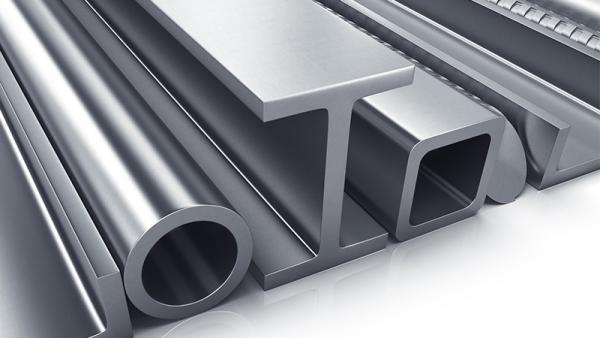
Simmal knows that understanding how aluminium behaves under load is essential in engineering, fabrication, and structural design. Every component, whether it forms part of a vehicle chassis, a marine structure, an aircraft frame, or a simple bracket, will experience forces during its service life. How materials respond to those forces determines not only performance but also safety and reliability, and this is where stress-strain behaviour becomes particularly important.
Aluminium exists in a wide range of alloys, each having distinct mechanical characteristics. These differences can significantly influence how an alloy responds to stress, how much it deforms under load, and how it ultimately fails. By exploring yield behaviour, tensile performance, and elongation capacity, you can better understand why certain aluminium alloys are suited to particular types of applications and which ones are right for your projects. Let’s find out more about what stress-strain behaviour is and how it relates to different aluminium alloys.
What Is Stress-Strain Behaviour?
Stress-strain behaviour describes how a material reacts when a force is applied. Stress refers to the internal force per unit area within a material, whilst strain measures the amount of deformation that occurs as a result of that force. When plotted on a stress-strain curve, the relationship reveals how a material transitions from elastic behaviour, where it returns to its original shape once the load is removed, to plastic behaviour, where permanent deformation occurs.
For aluminium alloys, the shape of this curve varies depending on composition, temper, and processing. Some alloys demonstrate a relatively gradual transition from elastic to plastic deformation, but others exhibit a more defined yield point. The balance between strength and flexibility is influenced by alloying elements such as magnesium, silicon, copper, zinc, and manganese, each of which alters the material’s internal structure.
Examining Different Aluminium Alloy Stress-Strain Behaviour
1xxx Series
The 1xxx series represents commercially pure aluminium grades. These alloys are extremely flexible and have excellent corrosion resistance but are also lower in strength. When it comes to stress-strain behaviour, they tend to exhibit significant elongation before failure, meaning they can deform substantially without fracturing.
This high elongation capacity makes them suitable for applications requiring deep drawing, forming, or shaping processes. Because they can stretch considerably before reaching their breaking point, they are often chosen where ease of shaping is prioritised over load-bearing strength. Their stress-strain curves typically show a long plastic region, indicating good ductile performance. However, their lower yield characteristics mean they are generally not used in applications where high structural loads are expected.
3xxx Series
The 3xxx series alloys contain manganese as the primary alloying element. Compared to the 1xxx series, these alloys demonstrate improved strength, yet they can still be formed with relative ease. Their stress-strain response reflects this balance, showing moderate yield behaviour and reasonable elongation before fracture. This makes them suitable for applications such as roofing sheets, cladding, and general fabrication. The material can absorb a degree of deformation whilst retaining its structure, which is advantageous in environments where minor flexing or thermal expansion may occur.
5xxx Series
The 5xxx series incorporates magnesium, significantly enhancing strength compared to commercially pure aluminium. These alloys often demonstrate a strong resistance to corrosion, particularly in marine environments, alongside favourable mechanical properties.
In terms of stress-strain behaviour, 5xxx alloys generally display higher yield characteristics than the 1xxx and 3xxx series, whilst still retaining good elongation. This means they can withstand greater stress before permanent deformation begins, yet they remain relatively flexible. Their ability to combine strength with toughness makes them well suited to structural panels, transport components, and marine applications where environmental resistance and a long material lifespan are important.
6xxx Series
The 6xxx series alloys, which typically contain magnesium and silicon, are among the most widely used structural aluminium grades. These alloys are heat-treatable, meaning their mechanical properties can be modified through controlled thermal processes. As a result, their stress-strain characteristics can vary depending on temper.
In general terms, 6xxx alloys exhibit a good combination of strength, stiffness, and moderate elongation. Their yield behaviour tends to be more pronounced than softer series, and they demonstrate reliable performance under tensile loading. Whilst they may not be as formable as purer grades, they provide sufficient deformation capacity for many engineering applications without becoming brittle. Because of this balance, 6xxx alloys are commonly used in architectural structures, transport frameworks, and extruded profiles where predictable mechanical behaviour is essential.
7xxx Series
The 7xxx series, typically alloyed with zinc and sometimes copper, is known for its high strength. These alloys are often associated with aerospace and performance-driven applications, and their stress-strain curves typically show higher yield characteristics compared to other aluminium families.
However, increased strength can come with reduced elongation. In some tempers, 7xxx alloys may demonstrate less flexibility than softer grades, meaning they undergo less plastic deformation before failure. This makes understanding their stress-strain behaviour particularly important in design contexts where impact resistance or fracture behaviour must be carefully considered.
Modulus of Elasticity and Stiffness Across Aluminium Alloys
It’s worth noting that though yield strength and tensile characteristics vary significantly between aluminium alloys, the elastic modulus, which relates to stiffness, remains relatively similar across most grades. This means that regardless of alloy, aluminium will deflect more under load than steel of equivalent dimensions due to its lower modulus of elasticity. In practical terms, alloy selection influences how much stress a component can withstand before permanent deformation begins, but stiffness is largely governed by material geometry and cross-sectional design rather than alloy family alone.
The Influence of Temper and Processing
Beyond alloy composition, temper designation has a profound effect on stress-strain behaviour. Work hardening, annealing, and heat treatment processes alter the internal grain structure of aluminium, directly impacting yield behaviour and elongation capacity. A single alloy may behave very differently depending on whether it’s supplied in a soft, annealed temper or a hardened, heat-treated condition. This reinforces the importance of understanding not only alloy family but also processing history when evaluating mechanical behaviour.
Ductility, Toughness, and Real-World Performance
Elongation, often used as an indicator of ductility, plays a key role in how aluminium components behave. Materials with higher elongation can absorb energy and deform plastically without sudden fracture, which can be advantageous in impact or fatigue-prone environments. Conversely, alloys with higher strength but lower elongation may provide superior load-bearing performance but require careful design consideration to avoid brittle-like behaviour under certain conditions. The relationship between strength and ductility involves a careful balance, and each alloy family falls at a different point within this range.
Final Thoughts
Selecting the right aluminium alloy depends on a clear understanding of how it will respond under load throughout its service life. Strength, elongation, and yield behaviour all influence how a component performs in use, particularly where repeated stress, impact, or structural demands are involved. Whilst alloy family plays an important role, temper condition and processing methods must also be considered when assessing mechanical performance.
By recognising how different aluminium grades behave across the stress-strain curve, engineers and fabricators can make informed material choices based on the needs of each application. This helps support structural integrity, maintain safety, and reduce the risk of unexpected deformation or failure in service. With the correct alloy and temper selection, aluminium can provide dependable performance across a wide range of engineering and fabrication environments, especially when you rely on Simmal to supply your chosen alloy.
Aluminium Alloys Supplied by Simmal
At Simmal, we source and supply a wide range of aluminium alloys across multiple series to support engineering, fabrication, and structural applications. Our extensive supply network enables us to provide access to grades from the 1xxx through to the 7xxx series, available in a variety of tempers and product forms. This means we can meet project requirements that call for specific mechanical characteristics, whether the focus is on forming performance, corrosion resistance, or load-bearing strength.
We understand that material selection depends on more than alloy family alone. Temper condition, processing method, and service environment must also be taken into account. Our team works with customers to identify suitable aluminium grades based on how the material will respond to stress in real operating conditions. By offering consistent access to a broad range of aluminium alloys, we can help ensure that each component is supplied with the performance characteristics needed for its intended use. If you still need advice regarding which aluminium alloy is most suitable for your project, then contact us today and a member of our team will be happy to help. Alternatively, you can browse our website to discover all our aluminium products and services, ranging from stockholding to machining and fabrication.