
Aluminium I Section vs Steel I Beam: Which One Should You Use?
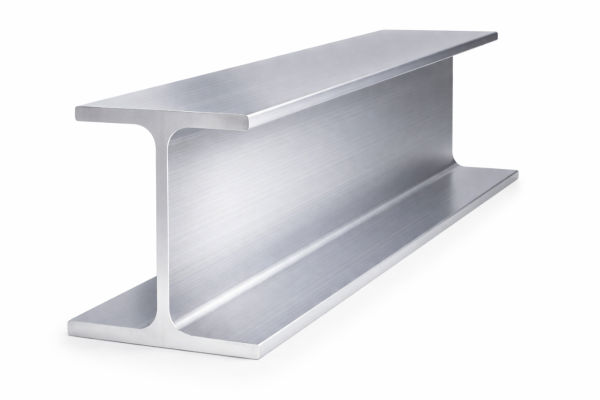
There are many important decisions to be made when designing a structure, and one of these involves choosing the right load-bearing component. I sections and I beams are widely used across construction, engineering, transport, and fabrication because of their ability to carry substantial loads whilst remaining structurally efficient. Their distinctive “I” shape distributes weight effectively, resisting bending and deflection under pressure. However, whilst the shape may be similar, the material you choose can dramatically affect things such as performance, longevity, and cost.
An Aluminium I section and a traditional steel I beam each have their own advantages, and selecting the right one depends on the specific demands of your project. Factors such as weight, corrosion resistance, structural strength, installation conditions, and long-term maintenance all play a role, and understanding how these materials compare will help engineers, architects, and builders make confident and informed choices in future projects. Let’s compare aluminium I sections and steel I beams and find out more about the role each profile plays.
Understanding the Role of I Sections and I Beams
I sections and I beams are crucial components in structural engineering because of how efficiently they handle loads. Their distinctive profile, with a central vertical web and two horizontal flanges at the top and bottom, is specifically designed to manage bending and shear forces in the most material-efficient way possible. When a beam is placed under load, the flanges resist the majority of the bending stress, whilst the web stabilises the section and carries shear forces. This clever distribution of material means that strength is concentrated exactly where it’s needed, reducing unnecessary weight without compromising structural integrity.
Because of this efficiency, I profiles are widely used in everything from building frames and mezzanine floors to bridges, trailers, platforms, and machinery supports. However, whilst the geometry remains consistent, the behaviour of the beam can vary significantly depending on whether it is manufactured from aluminium or steel. Material properties such as density, elasticity, yield strength, and corrosion resistance all influence how the section performs under load, how much it deflects, how it responds to environmental exposure, and how long it will last. Understanding these structural principles is essential when deciding which material is best suited to your specific application.
Comparing Aluminium I Sections and Steel I Beams
Weight: A Major Advantage for Aluminium
One of the most significant differences between aluminium and steel is density. Aluminium weighs roughly one-third as much as steel, which immediately transforms how a structure is designed, transported, and assembled.
Lighter I sections can mean reduced structural dead load, which can lead to smaller foundations and lower overall material requirements. In modular buildings, mezzanines, marine structures, transport frames, and mobile applications, this reduction in weight is invaluable. It improves fuel efficiency in vehicles and vessels, simplifies handling on site, and often eliminates the need for heavy lifting equipment during installation. Steel’s weight, whilst sometimes useful in static ground-based applications, can add complexity and cost during transport and installation. In contrast, aluminium’s lightness improves efficiency at every stage of a project, from fabrication to final assembly.
Strength-to-Weight Ratio: Efficiency Over Mass
Steel generally offers higher absolute tensile and yield strength than aluminium. However, strength alone does not determine performance. Aluminium provides an excellent strength-to-weight ratio, meaning it delivers substantial structural capability relative to its mass. Modern structural aluminium alloys such as 6082 and 6061 are engineered for high-performance applications, offering impressive mechanical properties and maintaining aluminium’s inherent advantages. In many real-world applications, aluminium I sections provide more than sufficient load-bearing capacity, particularly when structural design accounts for their characteristics.
Corrosion Resistance: Built-In Protection
Corrosion is one of the most significant long-term threats to structural materials. Steel, when exposed to moisture and oxygen, will rust unless protected by galvanising, paint systems, or specialised coatings. These treatments, whilst effective, add cost and require ongoing inspection and maintenance to remain effective. Aluminium, however, naturally forms a protective oxide layer when exposed to air. This layer shields the metal beneath from further corrosion without the need for additional treatment. In coastal environments, marine settings, industrial areas, and outdoor installations, aluminium I sections offer superior long-term resilience.
Maintenance and Lifecycle Costs
Whilst steel beams may appear cheaper initially, they often incur additional costs over time. Protective coatings must be maintained, and corrosion damage can require repair or replacement if left unchecked. Aluminium I sections typically require minimal upkeep. Their corrosion resistance reduces the need for regular treatment, and their lighter weight can lessen stress on connected components. When lifecycle cost is considered rather than simply upfront purchase price, aluminium often proves to be the more economical option in the long term.
Ease of Fabrication and Installation
Aluminium can also be cut, drilled, welded, and finished with relative ease, allowing engineers and fabricators to adapt designs efficiently. Because of this, aluminium I sections are often simpler to manoeuvre and position during installation, particularly in confined or elevated spaces. Steel fabrication, whilst robust, may require heavier machinery and more intensive labour during installation, and the weight of steel beams can increase installation time and safety considerations, particularly in complex builds. In projects where efficiency and reduced on-site labour are important, aluminium’s practical handling advantages can make construction quicker and more efficient.
Sustainability and Environmental Impact
Sustainability is increasingly influencing material selection, and aluminium is fully recyclable and can be reprocessed repeatedly without loss of quality. Plus, recycling this material uses a lot less energy compared to what’s used in its primary production. Also, because aluminium structures are lighter, they often reduce transportation emissions and improve energy efficiency in transport-related applications. Over the full lifecycle of a project, aluminium’s strength and lightness. recyclable nature, and reduced maintenance demands all contribute to a lower overall environmental impact, and whilst steel is also recyclable, its greater weight and higher maintenance demands can offset its sustainability benefits.
In Need of Quality Aluminium I Sections?
At Simmal, we’ve been supplying high-quality aluminium to UK industries for over 40 years, supporting engineers, fabricators, and construction professionals who need materials they can rely on. When it comes to aluminium I sections and structural profiles, we understand that strength, dimensional accuracy, and consistency are critical. That’s why we work closely with trusted mills and maintain strong supply networks so that the aluminium we provide can meet the demands of modern structures. We can source aluminium I sections in a range of grades suited to load-bearing and engineering use, including high-strength alloys such as 6082 and 6061. Whether your project requires lightweight sections for transport frameworks, corrosion-resistant material for marine environments, or durable structural components for modular builds, we can help you identify the right specification.
Beyond supplying quality aluminium, our experienced team is on hand to offer guidance on alloy selection, performance characteristics, and suitability for specific environments. We understand that choosing aluminium over steel is often about achieving a balance between strength, weight, and efficiency, and we’re here to help you get that balance right. With dependable services, technical insight, and decades of expertise, Simmal is ready to support your structural requirements from concept through to completion. Get in touch with a member of staff today to discuss your next project, or browse our website to find out more about our aluminium.
Final Thoughts
Whilst steel I beams remain a strong option for heavy, static structures, aluminium I sections offer a powerful combination of lightness, corrosion resistance, and lower maintenance demands. When lifecycle cost, ease of installation, and environmental impact are taken into account, aluminium often provides greater long-term value. Ultimately, the best choice depends on your project’s priorities. However, for applications where efficiency, strength, and reduced structural weight all matter in equal measure, then aluminium I sections present a smart, more favourable, and increasingly popular alternative to traditional steel.