
The Different Types of Panel Aluminium Explained
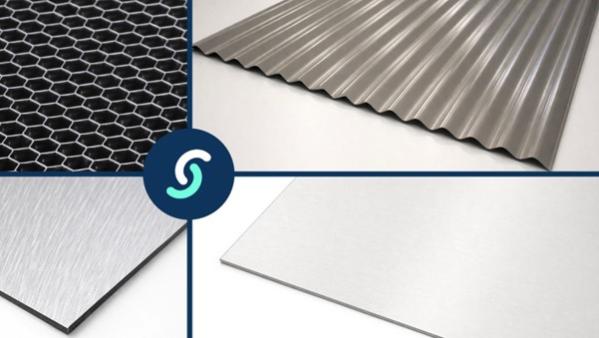
We know that panel aluminium has become increasingly important in modern construction. No matter if it’s a contemporary office façade, the side of an agricultural building, the interior of a train carriage, or even a cleanroom wall system, there’s a strong chance that aluminium panels are playing a vital role. This is due to many reasons, ranging from an impressive level of strength and lightness, along with the corrosion resistance needed to withstand daily wear and the flexible nature required for specialised designs.
However, it’s important to know that the term ‘panel aluminium’ actually refers to several products, each of which is engineered for specific performance requirements. Some are designed for a distinct, modern appearance, others for structural stability, and others for extreme weight reduction, and choosing the right type can affect not just how a project looks but also how it performs over decades of use. From composite and corrugated panels to solid sheets, let’s take a closer look at each kind of panel aluminium in order to find which one is best for your modern construction project.
Understanding Panel Aluminium
‘Panel aluminium’ refers to aluminium that has been formed or manufactured into flat or profiled sections which are intended to clad, enclose, divide, protect, or reinforce a surface. Some panels are made from a single thickness of aluminium sheet, whilst others combine aluminium skins with internal core materials to enhance stiffness or reduce weight. The differences between panel types aren’t just down to how they look, as they also relate to internal structure, mechanical strength, fire performance, and long-term strength. Before specifying a panel system, it’s important to consider load-bearing requirements, environmental exposure, fire regulations, maintenance expectations, and your overall project budget.
Types of Panel Aluminium
Aluminium Composite Panels
Aluminium composite panels are among the most recognisable modern cladding materials. They are manufactured by bonding two thin aluminium sheets to a central core, typically made from polyethylene or a mineral-filled fire-retardant material. This sandwich-style construction produces a panel that is lightweight yet rigid, offering excellent flatness and visual consistency.
One of the key reasons these panels have become so widely used is down to how easily they can be customised. The outer aluminium skins can be coated with durable finishes such as PVDF, polyester, or specialised coatings that replicate materials like stone or timber. This makes aluminium composite panels particularly attractive in retail, commercial, and architectural environments where visual impact is important.
Because the internal core is not solid aluminium, ACP panels are also significantly lighter than comparable solid sheet panels of the same thickness, reducing structural load and making installation simpler. These types of aluminium panels are commonly used for building façades, shopfronts, signage systems, interior feature walls, and exhibition displays where a clean, contemporary finish is required.
Solid Aluminium Sheet Panels
Solid aluminium sheet panels are manufactured from a single piece of aluminium without any composite core. They can be cut, folded, welded, or machined to create custom shapes and systems. Because they consist entirely of aluminium, they offer excellent strength, reliability, and fire resistance. Unlike composite panels, solid aluminium doesn’t contain polymer cores, which means it’s non-combustible and performs well in applications where fire safety is a major consideration. In addition, it retains all the natural benefits of aluminium, including corrosion resistance and its recyclable nature. Another advantage is their fabrication potential. Solid sheets can be anodised, powder-coated, perforated, or formed into bespoke profiles, giving designers both functional and aesthetic control.
Solid aluminium panels are frequently used in rainscreen cladding systems, industrial wall linings, marine environments, vehicle bodywork, machinery guards, and architectural façades. They are particularly suitable for environments exposed to harsh weather, coastal air, or industrial pollutants.
Corrugated Aluminium Panels
Corrugated aluminium panels are created by passing flat aluminium sheets through forming rollers that shape them into a repeating wave or rib pattern. This profiling process dramatically increases the stiffness of the panel without adding extra material thickness. The corrugation allows the panel to span larger distances between supports whilst resisting bending or deformation. As a result, corrugated panels provide an efficient balance between strength and weight. They are also highly effective at shedding water, making them particularly well suited to roofing and external wall applications.
These panels are widely used in agricultural buildings, warehouses, industrial sheds, garages, fencing systems, and industrial roofing projects. Their practical, robust appearance reflects their functional purpose. Whilst they may not offer the sleek finish of composite panels, they are dependable and cost-efficient in demanding outdoor environments. Because aluminium naturally resists corrosion, corrugated aluminium panels are also ideal for coastal or high-humidity areas where steel alternatives may deteriorate at a faster rate.
Aluminium Honeycomb Panels
Aluminium honeycomb panels represent a more advanced engineered solution, consisting of two thin aluminium face sheets bonded to a lightweight aluminium core formed into a hexagonal honeycomb pattern. This structure distributes loads extremely efficiently, being rigid whilst keeping weight to a minimum. The honeycomb design mimics natural engineering principles found in beehives, where strength is achieved through geometry rather than mass. This makes honeycomb panels ideal for applications where every kilogram matters.
Honeycomb aluminium panels are used in aerospace interiors, marine bulkheads, train interiors, cleanroom environments, exhibition flooring systems, and high-performance architectural cladding. In these settings, reduced weight improves fuel efficiency, simplifies installation, and offers lasting strength.
Comparing Types of Panel Aluminium: Which One is Right for You?
Each type of panel aluminium offers distinct performance benefits. For instance, aluminium composite panels prioritise appearance, lightweight handling, and design flexibility, and solid aluminium sheet panels focus on strength, fire safety, and strength. Corrugated panels maximise structural efficiency for roofing and external cladding, and honeycomb panels deliver advanced strength-to-weight performance for specialist industries.
Every type is valuable in its own right, and finding which one is right for you involves matching the right one to your specific application. A commercial façade may require the smooth appearance of aluminium composite panels, whilst an industrial facility may demand the robustness of solid sheet or corrugated panels. Aerospace or marine projects, on the other hand, may rely on the honeycomb pattern to reduce weight without compromising integrity.
Final Thoughts
The definition of panel aluminium is broader than people might realise. From composite panels designed for striking visual façades to solid sheet panels built for reliable structures, and from practical corrugated roofing to advanced honeycomb engineering, there are many different types on offer, with each one having different characteristics and functions.
Understanding these differences allows architects, engineers, and fabricators to specify materials confidently so that their chosen panel system delivers the right balance of performance, compliance, and cost efficiency, as well as makes sure that construction projects can perform well for years to come.
Supporting Panel Production with Quality Aluminium at Simmal
Whilst panel assemblies themselves may vary in structure and design, they all rely on dependable aluminium material at their core. At Simmal, we supply high-quality aluminium grades and profiles that form the foundation of many panel systems across construction, transport, marine, and engineering sectors. With decades of experience sourcing and supplying aluminium sheets, plates, and extrusions in a wide range of specifications, we help manufacturers and fabricators acquire the material they need to produce reliable, high-performance panel solutions. If your project involves aluminium panels, our knowledgeable team is ready to support you with the right aluminium to bring your designs to life. Contact us today if you have any questions or advice regarding your project, or browse our website to find out more about our services.