
What is 1050A Aluminium?
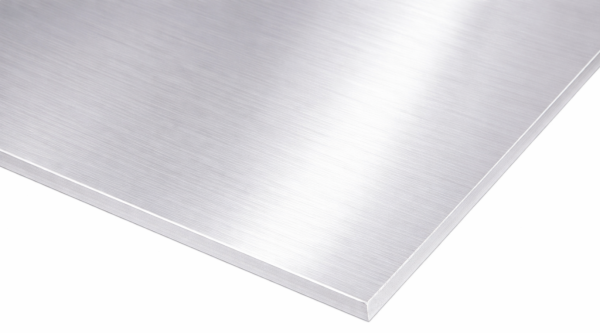
Aluminium is an extremely versatile metal that’s used in everything from aircraft frames and transport systems to packaging, electronics, and construction. But whilst it can be used for a wide number of different applications, it’s important to know that not all aluminium is the same. Different grades offer varying levels of strength, corrosion resistance, and conductivity, depending on the composition and how they’re processed, and one of the most widely used and easily recognised commercial grades is 1050A aluminium. Valued for its high purity, exceptional corrosion resistance, and excellent electrical and thermal conductivity, 1050A is often the go-to material in industries where strength isn’t the primary requirement, but reliability and cleanliness are crucial, as is the need for a material that’s easy to work with. But what exactly is 1050 aluminium, and how does it compare to other grades? Let’s find out more about its chemical composition and standout properties.
Understanding 1050A Aluminium
1050A aluminium is a non-heat-treatable, high-purity aluminium alloy, containing at least 99.5% pure aluminium by weight. It belongs to the 1xxx series, which consists of commercially pure aluminium grades with purity levels no lower than 99.0%. The “A” in 1050A is significant as it distinguishes the European standard version (EN AW-1050A) from other similar grades like AA 1050 (American standard) or 1350. Whilst chemically very similar, 1050A is specifically defined under EN 573-3 and EN 485-2, which govern aluminium alloy designations and mechanical properties in Europe. This high purity gives 1050A a distinct edge in applications where electrical conductivity, corrosion resistance, appearance, and ease of shaping are more important than high strength or toughness.
Key Properties of 1050A Aluminium
Despite not offering high strength, 1050A aluminium still has exceptional characteristics that make it ideal for numerous commercial and industrial applications. Here are the key properties of 1050A aluminium:
-
Electrical Conductivity
1050A is commonly used in electrical systems because of its excellent electrical conductivity. It achieves approximately 58% IACS (International Annealed Copper Standard), making it a strong alternative to copper in many electrical applications, especially where weight, cost, or corrosion resistance are important.
-
Thermal Conductivity
With a thermal conductivity of around 222 W/m·K, 1050A is highly effective at transferring heat. This makes it ideal for heat exchangers, LED heat sinks, radiator panels, thermal shields, and similar components requiring passive heat dissipation.
-
Corrosion Resistance
Aluminium naturally forms a thin oxide layer when exposed to air, providing excellent corrosion protection. In 1050A’s case, with minimal alloying elements to interfere, this oxide layer remains uniform and stable, making the alloy highly resistant in neutral and mildly acidic environments. It performs well in damp, coastal, or industrial atmospheres without the need for additional surface treatments in many applications.
-
Easy to Work With
Thanks to its soft structure, 1050A is particularly well-suited to deep drawing, spinning, bending, and cold working processes, making it ideal for formed parts, containers, and decorative elements. It’s also easily machined, drilled, and cut.
-
Reflective
1050A aluminium is also great at reflecting both light and heat. This makes it ideal for light reflectors, signage backings, and display panels, where consistent brightness and surface finish are key.
-
Non-Toxic and Food-Safe
Due to its high purity and corrosion resistance, 1050A is approved for use in food processing equipment, packaging, and storage tanks, provided surface treatments meet hygiene standards. It doesn’t leach or degrade when in contact with food, making it a safe material in food and beverage environments.
Typical Applications of 1050A Aluminium
-
Electrical Applications
1050A aluminium is extensively used for busbars, conductor rails, cable sheathing, and transformer components. Its conductivity and ease of fabrication make it a cost-effective alternative to copper in many systems, especially where weight savings are needed.
-
Heat Exchangers and HVAC
Its thermal performance and corrosion resistance make 1050A ideal for radiators, cooling fins, ventilation ducts, and heat exchangers. It’s also used in air conditioning and refrigeration systems, because it offers reliable thermal transfer without degradation.
-
Food and Chemical Equipment
1050A aluminium is commonly used in food-grade tanks, chemical containment vessels, pipework, and cladding for hygienic surfaces. Its non-toxic properties and corrosion resistance mean it complies with many food safety standards.
-
Architectural and Decorative Products
Because it responds well to anodising, polishing, and powder coating, 1050A aluminium is popular in decorative panels, signage, interior finishes, and reflective surfaces. It delivers a clean, bright appearance that requires minimal maintenance.
-
General Fabrication
This particular type of aluminium is also often chosen for panels, covers, plates, trays, ducts, guards, and non-load-bearing enclosures, as fabricators value 1050A’s ability to be easily cut, formed, punched, and joined using standard equipment.
How 1050A Aluminium Compares to Other Grades
When selecting the right aluminium alloy for a project, it's essential to understand how 1050A stacks up against other widely used grades. 1050A excels in purity, corrosion resistance, and conductivity, but it does so at the cost of mechanical strength. Compared to structural grades like 6082 or 6061, 1050A is significantly softer and less suitable for load-bearing or high-stress applications. For example, 6082 offers much higher tensile strength (typically around 295 MPa compared to 1050A’s 105 MPa) and is better suited for structural frameworks, bridges, and machine components. However, 1050A has a notable edge when it comes to electrical and thermal performance, often replacing copper in applications like busbars and conductor rails. Against 3003 aluminium, which has added manganese for improved strength, 1050A is softer but more conductive. When compared to 6063, which is popular for architectural extrusion thanks to its balance of strength and finish quality, 1050A is easier to form and offers higher purity, making it ideal for reflective or food-grade uses.
Summary
1050A aluminium may not be the strongest aluminium alloy, but its exceptional purity, corrosion resistance, and conductivity make it a vital material across a wide range of industries. No matter if it’s being used in electrical systems, food production, heat exchangers, or decorative finishes, its performance in non-structural applications is hard to beat. Easy to shape, safe for sensitive environments, and ideal for situations where strength isn’t the main concern, 1050A continues to be a reliable choice for manufacturers and designers who need a clean, efficient, and cost-effective aluminium solution.
Buy 1050A Aluminium from Simmal
At Simmal, we supply high-quality 1050A aluminium for electrical, decorative, and general fabrication. So, if you have an application that needs 1050A aluminium, we have the materials and experience to help. With over 40 years in the aluminium industry, we work closely with our customers to make sure they receive the right grade in the right size, whether it’s for small-scale prototypes or high-volume production. Plus, all of our 1050A products meet stringent quality standards, and we can provide custom cutting, machining, and finishing services in-house to keep your project moving smoothly. To find out more about our aluminium and services, browse our website today. Alternatively, you can contact us if you have any questions.