
The Aluminium CNC Machining Process – From Raw Stock to Finished Part
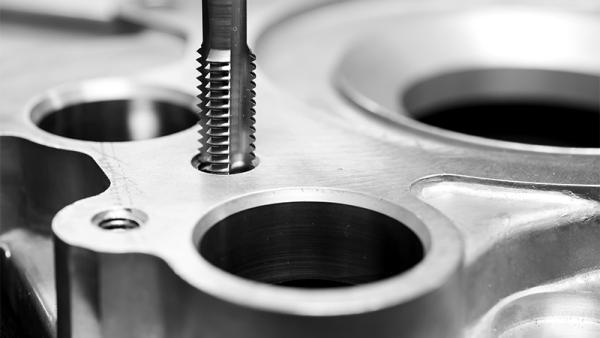
An aluminium component may look like a simple shape, but behind it lies a complex process that brings together advanced technology and expert engineering. CNC (Computer Numerical Control) machining has revolutionised how aluminium is shaped, enabling manufacturers to achieve higher levels of accuracy, consistency, and efficiency than what can be achieved through manual methods.
For industries like aerospace, automotive, construction, and general manufacturing, CNC machining can turn aluminium from a raw block or extrusion into a high-performance component that meets certain demands. The process involves several stages, from choosing the right alloy and designing a digital model to cutting and finishing, followed by a rigorous final inspection. Let’s break down each stage of the aluminium CNC machining process, showing how raw stock can become a finished part, and explore how, at Simmal, we can provide precision and expertise at every step.
The Aluminium CNC Machining Process
Selecting the Right Aluminium Material
A successful CNC machining process begins with choosing the correct aluminium grade. There are a number of aluminium alloys available, each designed with different performance characteristics. For example, 1050A offers excellent corrosion resistance and is able to be shaped without cracking, making it suitable for non-structural parts, whilst 6082 is widely used in engineering for its balance of strength and ability to easily be cut using machine tools. Another example is 7075, which provides exceptional tensile strength, making it a favourite in aerospace and motorsport. When deciding what alloy to choose, engineers evaluate factors such as load-bearing capacity, exposure to environmental conditions, ease of shaping/cutting, and finish requirements so that the chosen grade is suitable for the final application.
CAD Design and Digital Modelling
Once the aluminium grade is decided, the next stage is Computer-Aided Design (CAD). Engineers build a detailed 3D model that captures the overall geometry and precise tolerances, hole placements, surface features, and assembly interfaces. CAD models act as blueprints for production, making sure that every technical detail is accounted for before any actual machining begins.
Good design at this stage helps avoid wasted time and material in the long run. Engineers can also simulate stress points, optimise weight reduction by introducing cavities or ribs, and make sure that the part can be manufactured efficiently. Because CNC machines work to exact digital instructions, even the smallest measurement inaccuracy could be carried over to the final part, which is why careful modelling is vital for both performance and cost efficiency.
CAM Programming and Toolpath Generation
With the CAD model complete, the focus shifts to Computer-Aided Manufacturing (CAM). Here, the digital blueprint is converted into machine-readable instructions that guide the CNC equipment. Toolpaths are essentially roadmaps for the cutting tools, dictating how they move across the aluminium stock to remove material and form the part.
This stage requires balancing several priorities. Cutting too aggressively might damage the tool or material, whilst moving too slowly can increase production time and costs. Engineers use CAM software to optimise these paths, choosing optimal cutting speeds, tool types, and strategies for each feature of the design. For example, complex surfaces may require multi-axis toolpaths, allowing the cutting tool to approach from several directions. This allows for both precision and efficiency, especially when machining complex or high-tolerance parts.
CNC Machining: Cutting the Raw Stock
The raw aluminium stock, often supplied as a bar, billet, plate, or extrusion, is securely mounted in the CNC machine. Guided by the CAM-generated toolpaths, the machine’s cutting tools begin to remove material layer by layer until the part matches the 3D design.
CNC machining involves a range of processes. Milling is used to create flat surfaces, slots, and intricate shapes. Turning produces round parts by rotating the aluminium against the cutting tool. Drilling adds holes and channels, whilst high-speed routing can handle lightweight profiles or complex patterns. Because CNC machines are computer-controlled, the accuracy is exceptional, and parts can be machined to tolerances of just a few microns, meaning every piece in a production run can be identical.
Finishing and Surface Treatments
Freshly machined parts often have sharp edges, tool marks, or burrs, so finishing is essential. The first step might be deburring, which removes any unwanted edges, followed by polishing or bead blasting to achieve a smooth, uniform surface. Depending on the application, surface treatments can also be applied to enhance both appearance and performance.
Anodising is one of the most common treatments for aluminium. It thickens the natural oxide layer, improving corrosion resistance whilst allowing the metal to be coloured for visual appeal. Powder coating adds a durable painted surface that resists chipping, and polishing or brushing can achieve a specific visual finish for highly decorative parts. For critical components, surface treatments don’t just make the aluminium look good, they can actually help extend its working life and allow it to better withstand environmental or mechanical stresses.
Quality Control and Inspection
The final stage is quality control. Even the most advanced CNC machine requires inspection to check that the finished part meets the design specifications. At this stage, engineers measure key dimensions, check surface finishes, and confirm that tolerances are within acceptable ranges. Tools such as coordinate measuring machines (CMMs), laser scanners, or precision callipers are often used to verify accuracy. For industries like aerospace or medical devices, quality assurance is non-negotiable, and every part must meet rigorous standards before being cleared for use.
This step can also gather valuable feedback. If inconsistencies are found, adjustments can be made to the machining process to help make future runs even more reliable. In this way, quality control not only safeguards performance but also drives further improvement.
Why is Aluminium Ideal for CNC Machining?
Aluminium is a widely machined metal for a number of reasons. It offers an excellent strength-to-weight ratio, meaning components can be both lightweight and strong. It’s easier and faster to cut than harder metals like steel, helping reduce both production time and tool wear. It also has a natural resistance to corrosion and can be further enhanced with treatments like anodising or powder coating, giving it a long service life even in tough environments. Another huge benefit is its eco-friendliness. Aluminium is infinitely recyclable, and recycling it requires only about 5% of the energy used in primary production.
Benefits of Aluminium CNC Machining
Aluminium CNC machining offers a number of clear advantages that explain its widespread adoption. Firstly, CNC equipment is capable of working to incredibly tight tolerances, sometimes down to a few microns, meaning each component is consistent and accurate, even in high-volume production. Another benefit is efficiency. CNC machining automates much of the production process, reducing labour costs and dramatically cutting down lead times. Because the machines follow pre-programmed toolpaths, they can run continuously with minimal supervision, allowing businesses to scale up production quickly without sacrificing quality.
Material efficiency is also improved. Unlike traditional manual methods, CNC machining removes exactly as much material as required, minimising waste, and when combined with how recyclable aluminium is, makes CNC machining a much more sustainable choice. Finally, CNC machining is extremely versatile. Whether producing one-off prototypes, small batches for testing, or large runs for mass production, the process can easily be adapted to suit different demands. It’s also capable of producing highly complex geometries that would be difficult or even impossible to achieve by hand.
How Simmal Delivers Precision in CNC Aluminium Machining
At Simmal, we offer a premium aluminium CNC machining service, backed by revolutionary technology. Advanced machines are operated by incredibly knowledgeable engineers in order to create aluminium components to tight tolerances and specific requirements. They allow us to offer both 5-axis and 4-axis CNC machining so that we can manufacture parts up to 8m at an accuracy of +0.01mm.
Our experience and efficiency can help us deliver components with fast turnaround times and tackle both small and large volume orders so that we’re able to cater to various demands in short timeframes. Plus, with a collective knowledge base exceeding 500 years, you can trust us to carry out each stage of the CNC machining process with precision and care. If you want to find out more about our aluminium CNC machining, browse our website today.
Summary
The aluminium CNC machining process takes raw stock and transforms it into a finished component through a series of carefully controlled steps, involving selecting the right material, creating accurate CAD models, programming efficient toolpaths, machining with precision, applying finishes, and ensuring quality at every stage.
Thanks to its versatile nature and ease of cutting/shaping, aluminium is one of the best materials for CNC applications across numerous industries. And with companies like Simmal having exceptional CNC machining capabilities, UK businesses can benefit from a reliable service that delivers both precision and performance. If you would like to find out more about what we offer, please contact us by calling 01772 324277.