
Aluminium Grades Explained: What You Need to Know Before Choosing
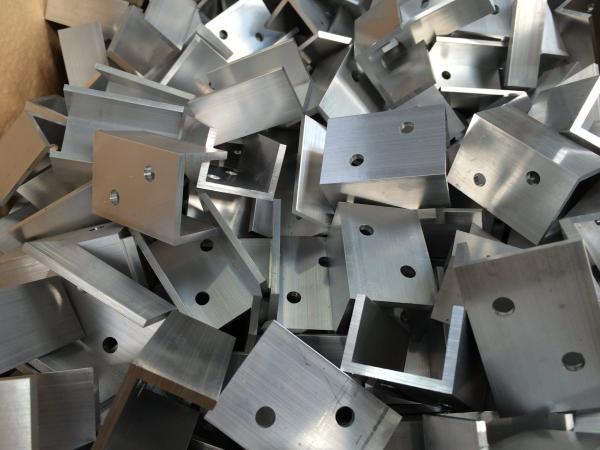
Aluminium is one of the most widely used metals in the world. It’s lightweight, strong, corrosion-resistant, and incredibly versatile. You can find it in smartphones, aeroplane wings, car parts, and structural components, with its adaptability making it essential across industries like construction, aerospace, transport, and manufacturing. Not all aluminium is made the same, however, and if you’re working on a project and using this material, choosing the right grade will be an incredibly important decision.
From pure options used in chemical processing to high-strength alloys designed for aerospace engineering, there are a number of aluminium grades available on the market, with each one having its own unique properties depending on the elements it’s alloyed with and how it’s been processed. Various factors, like the level of strength, corrosion resistance, formability, and weldability, can vary amongst grades, meaning it’s crucial that you’re aware of each one in order to make sure that you select the right one for the right application.
At Simmal, we’re a leading UK aluminium stockholder and service provider, and in our bid to help you make informed and confident choices, we believe it’s essential to understand the differences between each grade. That’s why we’ll break down the most common, along with more specific aluminium grades, explaining what they’re best suited for and how they perform in real-world applications.
How Aluminium Grades Are Classified
To better understand aluminium grades, it’s important to look at the numbering system that classifies them. Developed by the Aluminium Association, this system uses a four-digit code to identify the alloy family and its composition. The first digit indicates the series, and the rest narrow it down to specific variants. There’s also a second designation known as the temper, such as T6, which tells you how the material has been heat-treated or work-hardened to achieve certain mechanical properties.
Most Commonly Used Aluminium Grades
The 1xxx Series
The 1xxx series contains 99% or more aluminium content, making it exceptionally resistant to corrosion, highly ductile, and easy to work with, especially in terms of bending, shaping, and forming. Among the various grades in this family, 1050A stands out as one of the most commonly used. It’s well-known for its excellent conductivity, both electrical and thermal, making it suitable for electrical components and heat transfer systems. It’s also considered safe for food processing and pharmaceutical applications. It can also be used in lamp reflectors, chemical tanks, signage, and even packaging.
However, because 1050A contains very little in the way of strengthening elements, it doesn’t offer a lot of mechanical strength, meaning you wouldn’t want to use it for load-bearing or structural roles. But, if your priority is resistance to corrosion and ease of fabrication, then 1050A aluminium is a fantastic choice.
The 6xxx Series
The 6xxx series includes a blend of magnesium and silicon, which gives these alloys properties that make them suitable for a wide variety of applications. One of the most popular options in this series is 6082, especially in the T6 temper, referred to as 6082T6. This grade has become invaluable in industries like construction, transport, and marine engineering due to its strength, corrosion resistance, and excellent machinability.
What sets 6082T6 apart is the T6 heat treatment. This involves heat treatment followed by artificial ageing, which significantly improves its strength and hardness without compromising its workability. Unlike some high-strength alloys, 6082T6 is relatively easy to weld and machine, making it suitable even for more complex fabrication tasks. In environments where exposure to the elements is a concern, like in coastal construction or marine applications, 6082’s corrosion resistance also holds up remarkably well. It doesn’t quite match the 1xxx series in this regard, but it still offers far better mechanical performance.
The 7xxx Series
The 7xxx series uses zinc as the primary alloying element and is designed for maximum strength and durability, often at the expense of weldability and formability. The most widely recognised grade in this family is 7075, a high-strength alloy that was originally developed for use in the aerospace industry. Today, it’s used in applications where strength-to-weight ratio is critical, including in aircraft structures, performance automotive components, and mountain bike frames.
7075 offers excellent tensile strength relative to its weight. It also provides good fatigue resistance, making it suitable for components that experience constant stress. However, its corrosion resistance is not quite as good as other grades, and its low level of weldability means it often requires mechanical fastening or precision machining.
Beyond the Big Three: A Closer Look at the 2xxx, 3xxx, 4xxx, and 5xxx Series
Whilst the 1xxx, 6xxx, and 7xxx series are some of the most commonly used aluminium alloys, there are several other series that can also be important depending on your project needs. These include the 2xxx, 3xxx, 4xxx, and 5xxx series, which are frequently used in specialised applications across transport, construction, electronics, and marine industries.
2xxx Series: Aluminium-Copper Alloys for High Strength
The 2xxx series aluminium alloys use copper as the principal alloying element, resulting in materials with high strength and excellent fatigue resistance. These alloys are often compared to steel in terms of mechanical properties, which is why they’re widely used in aerospace and high-performance automotive applications.
However, the 2xxx series tends to have lower corrosion resistance, especially in moist or marine environments, so protective coatings or anodising are usually required. Welding can also be challenging, as many of these alloys are not considered weldable by conventional methods. The most well-known alloy in this group is 2024, which offers an excellent strength-to-weight ratio but must be carefully handled in corrosive environments. This series is typically reserved for critical structural components where strength matters more than environmental exposure.
3xxx Series: Manganese Alloys with Excellent Corrosion Resistance
3xxx alloys use manganese as the main alloying element and are commonly found in roofing, siding, food and beverage packaging, and cookware. One of the most widely used grades in this series is 3003, which is known for its excellent workability, making it ideal for deep drawing and forming processes. Whilst it doesn’t offer high strength like the 6xxx or 7xxx series, its resistance to corrosion and easy fabrication make it great for industries where appearance and durability are essential but strength is not a primary concern.
4xxx Series: Silicone-Rich Alloys for Thermal Control and Wear Resistance
The 4xxx series uses silicon as the main alloying element and is particularly valued for its low coefficient of thermal expansion and high wear resistance, which makes it ideal for automotive engine parts, heat exchangers, and welding wire. Silicon improves the fluidity of molten aluminium, which is why 4xxx series alloys are often used in casting and welding applications. Some grades in this series are specifically designed as filler materials to join dissimilar metals or alloys, making them crucial in both industrial fabrication and precision manufacturing. One of the best-known examples is 4045, which is widely used in brazing sheet applications, particularly in the automotive industry.
5xxx Series: Magnesium Alloys for Strength and Marine Resistance
The 5xxx series aluminium alloys incorporate magnesium, producing a material that’s both strong and corrosion-resistant, especially in marine environments. These alloys are non-heat-treatable but offer excellent weldability and moderate-to-high strength, making them highly versatile. One of the most commonly used grades in this group is 5083, which is often used in shipbuilding, pressure vessels, and offshore structures. Thanks to its high resistance to saltwater corrosion, it's ideal for use in seawater-facing applications where structural integrity and long-term durability are essential. Another notable grade is 5251, which offers good formability alongside its corrosion resistance and is commonly used in tanks, silos, and vehicle body panels.
Final Thoughts
Choosing the right aluminium grade means understanding its behaviour under specific conditions. Factors like strength, corrosion resistance, formability, and weldability all play a role in selecting the best fit for your project, and by getting familiar with how aluminium grades are classified and what each one is best used for, you can make more confident, informed decisions.
But if you need support, then Simmal is here to help. We’ve been supplying aluminium to UK industries for over 40 years, building a reputation for quality, reliability, and expert service. As one of the country’s leading stockholders and service providers, we supply numerous aluminium grades in order to provide sectors like construction, aerospace, and transport with the right materials needed to make their projects succeed. Our team is also on hand to offer guidance, whether you're managing a large-scale industrial project or need a bespoke engineering solution. To find out more about Simmal, browse our website today. If you need any assistance, please call 01772 324277 and we’ll be happy to help.