
UK Aluminium Recycling Hits Record Levels in Push for Circular Economy
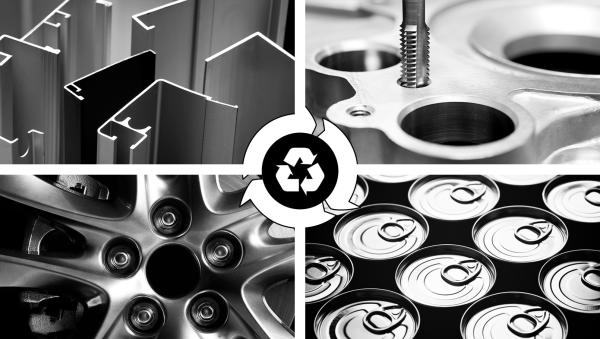
In recent years, we’ve noticed a dramatic shift in the approach to recycling across the UK, and one material that’s standing out as a frontrunner in this sustainable revolution is aluminium. Thanks to significant government policies, increasing public awareness, and improvements in recycling infrastructure, aluminium recycling across the UK has reached record-breaking levels.
This momentum isn’t just good news for the environment. It’s also a clear indication that the nation is actively moving towards a circular economy that aims to eliminate waste and make the very most of the world’s resources. But how exactly did we get to this point, and how does Simmal fit into the bigger picture?
The Rise of Aluminium Recycling in the UK
Around a decade ago, aluminium recycling wasn’t up to scratch. Limited infrastructure, public confusion, and insufficient sorting technology meant that much of this material ended up in landfill sites.
In present day, however, it’s reached an all-time high, with several statistics indicating an astonishing level of improvement. For instance, the UK achieved a record 162,357 tonnes of aluminium packaging collected for recycling in 2023. 2024’s figures were not far behind, either, coming in at a whopping 157,049 tonnes.
The UK construction industry also gained momentum, with the collection rates of aluminium during demolition reaching between 92% and 98%, and according to the Council for Aluminium in Building, many supply chains now see cities as ‘urban mines’ for the future extraction and re-use of aluminium in both construction and transport infrastructure.
Certain aluminium products have been recycled extensively recently, with the rate for beverage cans reaching an incredibly high 81% in both 2023 and 2024. In fact, aluminium packaging as a whole saw a respectable 15% increase in Q3 2024, compared to the same period the previous year. These notable rises show heightening momentum in the UK’s aluminium recycling efforts, both at public and industrial levels. But what factors are driving this surge?
What’s Driving the Growth in Aluminium Recycling?
There are a number of factors which have influenced the growth in the recycling of aluminium, from government legislations and policies to better public awareness and consumer behaviour. Let’s take a closer look at the current driving forces.
Government Legislations and Policies
The UK government is taking continuous steps to achieve a greener economy, and certain legislations are persuading businesses to pay more attention to how they discard their aluminium.
Businesses are faced with the Extended Producer Responsibility (EPR), which ensures that producers pay for the full lifecycle of their packaging. This law effectively sets down a ‘polluter pays’ principle, which has urged companies to choose packaging that’s easier and cheaper to recycle. Because aluminium is 100% reusable and has an established recycling infrastructure in the UK, it's becoming a more attractive option for brands looking to reduce their environmental impact and compliance costs.
Another noteworthy policy is the Resources and Waste Strategy for England, which was published in 2018. It aims to transition to a circular economy by reducing waste, promoting resource efficiency, and maximising the value of materials such as aluminium. The strategy sets a goal of doubling resource productivity and eliminating avoidable waste by 2050, focusing on areas like reuse, repair, and recycling.
Public Awareness and Consumer Behaviour
The increase in recycling aluminium can also be attributed to improved public awareness and behaviours. This is thanks to many nationwide campaigns, such as Every Can Counts and Recycle Now, which not only have promoted the importance of recycling materials like aluminium but also made the general population aware of how easy it can be. These campaigns have had further backing by various informative documentaries, which also share the same goals.
Improved Recycling Infrastructure
The nation has also seen a big improvement in its recycling infrastructure in recent years. For example, we have seen the introduction of new high-tech material recovery facilities (MRFs). These plants used advanced sorting technologies, like eddy current separators and optical sorters, making it easier to extract aluminium from mixed waste effectively. These facilities then prepare the recycled material for shipment to various manufacturers who use it to create new products, thus contributing to a more circular economy. TORMA and Machinex are leading the way in this regard, introducing automated systems that can accurately separate aluminium from mixed recycling streams at astoundingly high speeds, improving overall yield and purity.
Certain policies, advancements, and changing behaviours have all helped boost aluminium recycling across the UK in support of a circular economy. But why does this growth matter so much? To better understand this, we’ll highlight the positive environmental impact of recycling aluminium.
The Environmental Impact of Recycling Aluminium
Firstly, producing recycled aluminium generates far fewer greenhouse gas emissions than creating it from bauxite ore (97% fewer emissions, to be precise). This makes the recycling of this material key in the fight against climate change. Reusing what’s already available also means that we reduce the need for mining bauxite in the first place, which is an invasive process and can damage the environment. This means less deforestation, water pollution, and habitat destruction in the long run. Like with other items, recycling aluminium results in less waste ending up in landfill sites, meaning a reduction in methane emissions, space issues, and long-term pollution risks.
The Role of Simmal in Sustainable Aluminium Usage
With such clear environmental benefits and incentives in place, it’s no surprise that UK businesses are embracing aluminium, and that’s where Simmal comes in. We’re a leading UK aluminium supplier who takes sustainability very seriously. Our extruded profiles and solutions are engineered for longevity so that what we offer is made to last, meaning a reduced need for frequent replacements, which is a core principle of sustainable design. With the recyclability of aluminium being near-infinite as well, even end-of-life Simmal products can be recycled, restored, and re-entered into the supply chain to help contribute towards a UK circular economy. If you’re interested in discovering a number of high-quality aluminium products that are tailored to the sustainability needs of today, then browse our website.
End Note
Aluminium recycling in the UK is on the rise, and it’s a big sign that we’re moving ever closer to achieving a circular economy. Backed by government support, smarter infrastructure, wider awareness, and eco-conscious businesses like Simmal, the aluminium industry is proving that sustainability is possible, practical, and powerful.