
The Ultimate Guide to Aluminium Extrusions: Why Engineers Choose Simmal
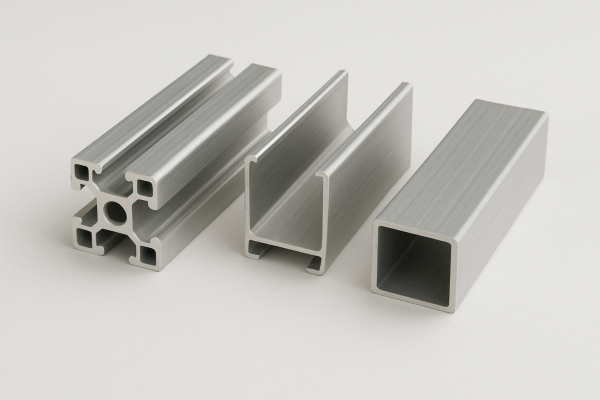
If you’ve walked through a modern building, worked on a factory floor, or looked under a car bonnet, it’s likely you’ve seen aluminium extrusions in action. These sleek, strong, and adaptable metal profiles are used in everything from structural frameworks and window systems to machinery and vehicle components. But what are they, what makes them such a staple in engineering, and why do so many professionals turn to suppliers like Simmal when sourcing quality extrusions?
What is Aluminium Extrusion?
Aluminium extrusion is a manufacturing process where a heated aluminium billet is forced through a die (a shaped opening) to create a continuous profile with a uniform cross-section. This material is ideal for extrusions because of its superb malleability, lightweight nature, and structural toughness. It can be formed into complex shapes with tight tolerances whilst still maintaining its strong and hard-wearing nature.
There are three basic types of aluminium extrusions, with each one serving different structural and functional purposes, depending on the application:
- Solid extrusions: these kinds of extrusions have no voids or openings, with square bars being a prime example.
- Hollow extrusions: hollow extrusions sport fully enclosed cavities (e.g. tubes).
- Semi-hollow extrusions: these extrusions have partial or complex openings (found in channels or U-profiles).
How Are Aluminium Extrusions Made?
The general extrusion process can be broken down into several steps, starting with preheating. Firstly, an aluminium billet is heated to around 450–500°C in order to accommodate shaping. Once the billet reaches this temperature, it’s then pushed through a steel die under high pressure to get the desired profile. After this, the extruded shape is rapidly cooled, using air, water, or a mixture of both. Once the aluminium is cool enough, the profile is then straightened and cut to standard lengths.
Extrusions may also undergo T5 or T6 ageing treatments to boost hardness and strength. T5 involves air cooling the aluminium to a specific temperature to achieve the desired hardness. T6 involves cooling with water, which can achieve an even higher level of strength.
After extrusion, aluminium may also be given a specific finish to enhance its appearance and offer additional protection. There are four main finishes for aluminium extrusions:
- Mill finish: this is simply a layer of oxidisation caused by natural exposure to the air.
- Anodised finish: this electrochemically induced finish produces a thicker oxide film for better defence.
- Powder coating: powder coating is where dry, powdered paint is applied to the metal, then cured with heat.
- Polished finish: polishing aluminium can give it a high-grade shiny appearance, which is ideal for settings where visual appeal is extremely important.
Benefits of Aluminium Extrusions
Extruding aluminium offers a number of desirable benefits. Firstly, this material is extremely lightweight yet incredibly strong, meaning it offers a superb mixture of low density and high strength. This makes it ideal for applications where a reduction in weight is a priority, but strength is also necessary. Aluminium extrusions are also economical, working with a material that’s fully recyclable. This helps businesses better align with sustainability goals as well as reduce lifecycle costs in construction and manufacturing.
Complex cross-sections, internal cavities, and integrated features (like channels or mounting slots) can be built directly into the profile as well, saving time and additional machining costs. As well as this, particular finishes can look especially attractive, helping enhance the appearance of many different items.
Where are Aluminium Extrusions Profiles Used?
Due to the number of benefits on offer, aluminium extrusion profiles are used across a variety of different settings, from construction and architecture to manufacturing and even robotics. Here’s a closer look at where these profiles are used:
Construction and Architecture
From window frames and curtain walling to roof trusses and balustrades, aluminium extrusion profiles are widely used in modern construction for their strength, visual appeal, and resistance to weathering.
Transport and Automotive
Lightweight extruded transport and automotive parts (including chassis components, rails, brackets, and mounting frames) can help improve fuel efficiency and reduce emissions.
Electrical Heat Transfer Systems
Aluminium’s high thermal and electrical conductivity also make this material ideal for heat sinks, cable trays, and electronic housings, especially where thermal management is critical.
Manufacturing, Assembly Lines, and Robotics
T-slot extrusion profiles are commonly used for machine frames, enclosures, and automated systems, allowing modularity and easy integration in fast-paced industrial environments.
Why Engineers Choose Simmal for Aluminium Extrusion
There are numerous reasons why engineers choose Simmal for aluminium extrusions. Firstly, we stock a wide selection of channels, angles, flat bars, tubes, and box sections. Many of these can also be delivered next day, giving engineers much-needed reassurance that we can provide for their time-sensitive projects. In addition to our standard products, we also offer an extrusion service where our experienced team works closely with customers across the UK during the design phase to source functional profiles that offer peak performance across numerous markets.
Simmal is also a highly experienced force in the aluminium industry, having delivered quality products and services for nearly 50 years. By choosing to work with us, you can gain invaluable insights from a company that’s built on family and has a sincere, customer-focused approach.
We want to help people acquire the right aluminium products for their projects, and our expertise and dedication have helped make that happen for lots of businesses across the UK. To find out more about our extrusion capabilities, please browse our website for more information.
Final Summary
Aluminium extrusion creates some of the most versatile and cost-effective materials in modern engineering. From construction and transport to industrial automation, the adaptability of extrusion profiles makes them extremely valuable across many sectors. Whether you’re working on a major infrastructure project or designing a precision component, choosing the right extrusion is key, and understanding your supplier’s capabilities is a major part of that decision.