
UK Aluminium Demand Soars as Infrastructure Projects Accelerate in 2025
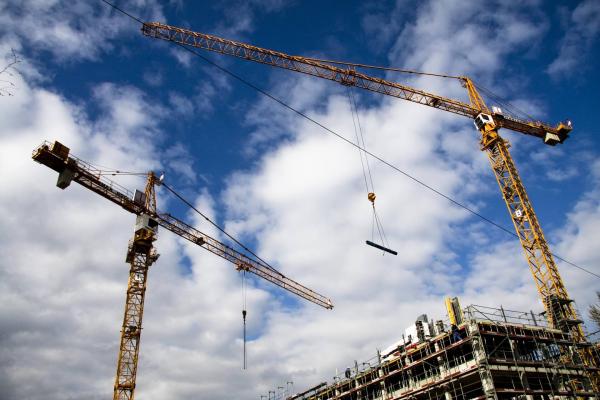
As the UK moves further into 2025, aluminium has become even more sought after in the construction and infrastructure industries. We’ve seen a big surge in large-scale developments as well as investments in renewable energy and smart city rollouts. All of these are fuelling a big demand for aluminium products, especially architectural profiles, structural extrusions, and precision-fabricated components.
Driven by the UK government's post-COVID infrastructure agenda and net-zero ambitions, aluminium's strength, lightness, and recyclability are proving to be invaluable. With major construction projects ramping up across the country, manufacturers and suppliers like Simmal are expanding capacity and services to meet this rising demand.
UK Infrastructure Investment Hits Record High in 2025
According to the National Infrastructure and Construction Pipeline (NCIP) 2024 report, the UK is set to invest up to £755 billion in public and private infrastructure projects over the next decade. This includes major upgrades to transportation, water systems, energy networks, and urban regeneration projects.
One of the biggest contributors to this increase in investment is the expansion of smart city infrastructure in places like Manchester, Birmingham, and Glasgow. Another big project is the Lower Thames Crossing, which is set to become the largest road tunnel in the UK, even being described as “the most significant road project in a generation.”
Projects like these will rely heavily on lightweight, durable, and corrosion-resistant materials like aluminium. From bridge deck extrusions to façade framing systems, this material offers the mechanical properties needed for modern, dependable, and energy-efficient construction.
Green Energy Projects Driving Aluminium Use
Aluminium demand isn’t just being driven by traditional infrastructure, either. Renewable energy installations are also playing a significant role. The UK’s push to reach net-zero carbon emissions by 2050 is prompting heavy investments in solar farms, wind turbines, electric vehicle charging networks, and battery storage systems.
For instance, in 2024 alone, the UK installed an incredible 1.2 GW of solar capacity, and the government is aiming to deploy 45 GW by 2030. EV infrastructure is being rolled out nationwide as well, under the government’s £1.6 billion Electric Vehicle Infrastructure Strategy, which states an intent to reach 300,000 charge points by 2030. A major offshore wind farm, known as Dogger Bank Wind Farm, is another heavy investment in renewable energy. Located more than 130km off the North East coast of England, this project has demanded several billion pounds of funding and will become the largest offshore wind farm in the world.
Aluminium is critical in all these sectors due to its non-magnetic nature, corrosion resistance, and thermal conductivity, making it ideal for solar panel frames, turbine components, and power system housings.
Smart Cities and Aluminium Integration
The UK's shift toward smart urban infrastructure is another major driver behind the rise in aluminium demand. Cities are adopting digital technologies and sustainable design principles to create more efficient, connected, and resilient environments.
A major example of this is Bristol’s Smart City Programme, which has positioned the city as a UK leader in urban innovation. The council-led plan focuses on reducing CO₂ emissions and placing sustainability at the heart of the community through innovative projects. Other notable initiatives include Smart Belfast and Glasgow's Future City Demonstrator project, as well as Milton Keynes’ MK: Smart plan.
In these developments, aluminium extrusions and fabricated components are used extensively for sensor-integrated street furniture, EV charging stations, modular lighting systems, and smart kiosks. Its lightness, long-lasting, and easily customisable properties mean it’s extremely useful for embedding tech into everyday urban infrastructure, especially in places that require exceptional strength and frequent public use.
Simmal’s Response to the Rising Aluminium Demand
As the demand for aluminium continues to rise across infrastructure, energy, and smart city sectors, we’re continuing to play a key role in providing the materials that keep projects moving. With a wide selection of aluminium bars, angles, tubes, and structural profiles, we offer an extremely versatile supply of aluminium, with many products also able to be delivered within 24 hours, making us a dependable partner for time-sensitive and large-scale developments.
In addition to our diverse stock supply, we also provide a number of expert services, including machining, fabrication, design, and development. Our services aim to meet clients’ exact specifications so they can achieve custom architectural elements, renewable energy frameworks, and modular construction components. We’re also backed by nearly half a century of experience, meaning that we have the expertise, precision, and commitment to quality needed to help cater to the UK’s evolving engineering landscape. Find out more about Simmal’s services today.
End Summary
The sharp rise in UK aluminium demand is a direct reflection of the country’s shifting priorities. The UK is now clearly focused on smarter cities, greener energy, and faster infrastructure development. At the heart of these changes is aluminium, offering the flexibility, performance, and sustainability that these kinds of projects require, making it no wonder why it’s even more heavily sought after in 2025. With experienced suppliers like Simmal working hard to meet these demands, the future of UK construction isn’t just brighter; it’s also lighter, stronger, and built from this exceptional material.